Glass block

Glass block, and the one thing it cannot do.

Glass block is a decent basement window and a poor emergency exit, and the difference matters only in some rooms. This page is about telling those rooms apart, because the answer decides whether glass block is a sensible choice or a code violation you paid to install.

The short version

A fixed panel has a net clear opening of zero.

Egress is not measured in glass area or in daylight. It is measured as the net clear opening: the hole a person can actually climb through when the window is open in its normal operating position. A mortared glass block panel does not open, so that measurement returns zero, and zero does not improve with a bigger panel. This is not a close call or a matter of which inspector you draw.

Some glass block windows are sold with a small hopper or dryer vent set into the panel. That vent exists to move air. It is not sized, and is not intended, for a person to pass through, so it does not change the answer either.

The numbers it would have to meet

What the model code asks of an emergency escape opening.

5.7 sq ft
Net clear opening area

Drops to 5 sq ft for grade-floor and below-grade openings.

R310.2.1, 2021 edition

24 in
Minimum net clear opening height

Measured with the window in its normal open position.

R310.2.2, 2021 edition

20 in
Minimum net clear opening width

Height and width both have to be met, and together they still have to clear the area above.

R310.2.2, 2021 edition

44 in
Maximum sill height above the finished floor

Measured to the bottom of the clear opening, not to the frame.

R310.2, 2021 edition

9 sq ft
Minimum window well area

With a horizontal projection and width of at least 36 inches.

R310.4.1, 2021 edition

44 in
Well depth above which a ladder or steps is required

The ladder has to be permanently affixed, and it may not be blocked by the window when open.

R310.4.2, 2021 edition

International Residential Code (IRC), 2021 edition, read on 2026-08-30. Local jurisdictions amend these, and the building department that inspects your house is the one that decides. Ask them for the figure they apply before you buy.

Where glass block is the right answer

Rooms nobody sleeps in.

A utility room, a laundry, a storage area, a workshop: places that want daylight, want to keep intruders out, and are never going to be a bedroom. Glass block is genuinely good at this. It admits light, it resists a crowbar in a way a basement sash does not, it does not rot, and a below-grade panel is not going to be jemmied open from the well. If that is your room, this page is not an argument against your plan.

Where it is the wrong answer

Any room used for sleeping, now or later.

This is the trap, and it is usually sprung years later. A basement gets finished, a room becomes a spare bedroom, and the glass block that was fine for a storage room is now the only window in a room someone sleeps in. At that point it is not a preference, it is a failed inspection, and it can surface at resale when the listing calls the room a bedroom and the appraiser does not.

If there is any chance the room becomes a bedroom, the cheap moment to fit an opening window is while the wall is already open.

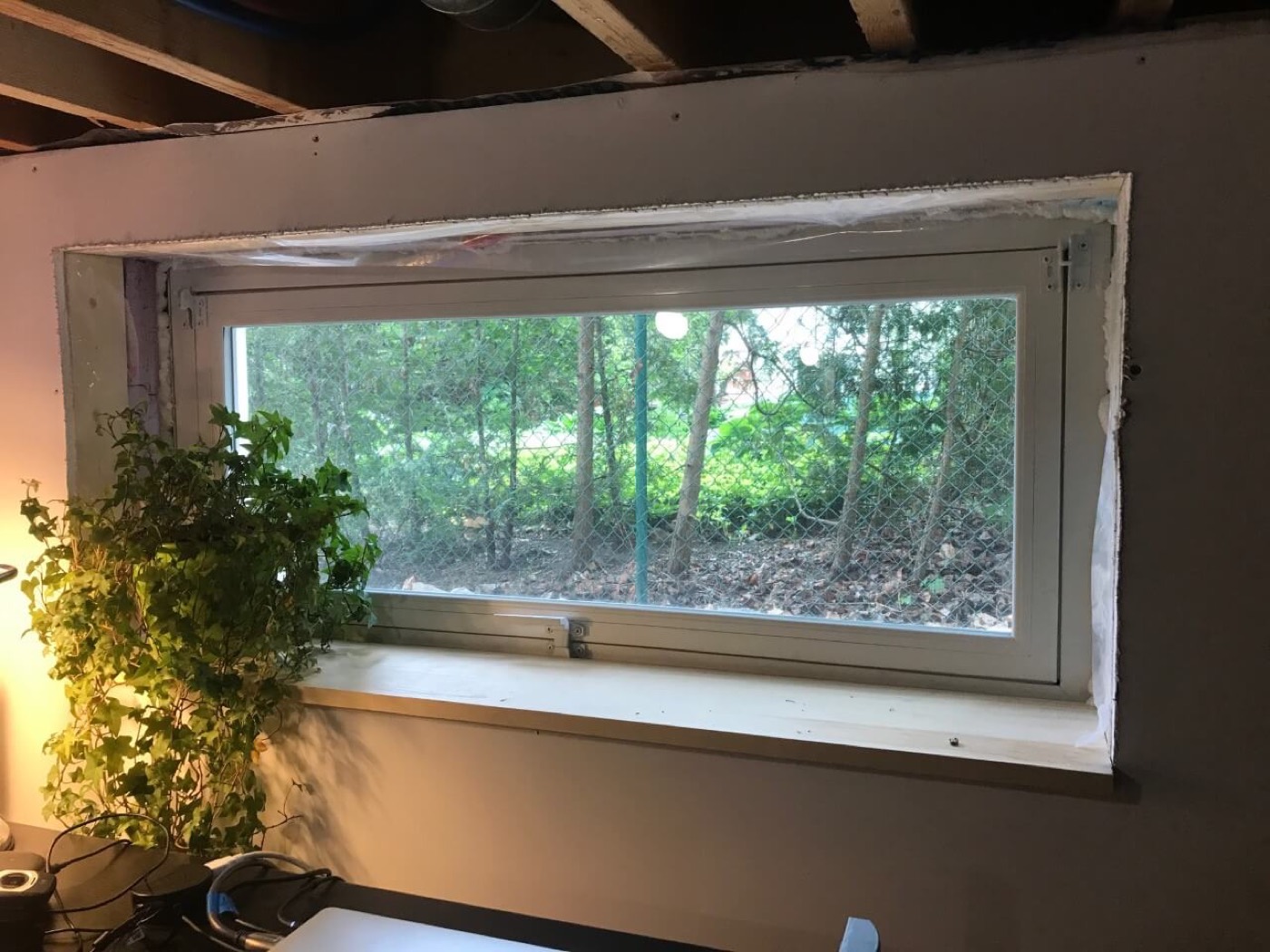
A large basement window looking out onto trees at ground level
Photo: The Great Egress Co.

Why there is no price on this page

We did not find a glass block price we were willing to publish.

Our prices come from installers and merchants who publish their own numbers, and we link every one of them. The glass block figures we came across all traced back to aggregator sites that estimate rather than quote, and we do not republish estimates as if they were prices. So this page carries none. If we later record a glass block price from a source that stands behind it, it will appear here with its link, like every other number on this site.

The vented ones

A vent is for air. It is still not an exit.

Plenty of glass block panels are sold with a small hopper vent or a dryer vent set into them, and they are a sensible buy: a below-grade room with no ventilation at all gets damp. What the vent does not do is change the measurement. It is sized to move air, a person does not fit through it, and a panel with a vent is still a fixed panel as far as the escape opening is concerned.

So the vent is worth paying for if the room is a laundry or a workshop. It is not a way to keep glass block in a bedroom.

The question underneath

What does it cost to replace it with one that opens?

This is what most people are really asking, and it splits in two exactly like every other job on this site. If the opening your glass block sits in is already big enough, you are buying a window. If it has to be cut wider or deeper, you are buying a job. Glass block panels are usually set in a small opening, so it is more often the second.

The window, bought direct

$500–$1,000

Manufacturer list price across 5 models, 3 of them code-compliant for egress.

See which models clear egress code

The job, done by a contractor

$2,500–$20,000

24 prices published by 9 installers across 7 states, each one named and dated.

See every published price

Neither figure is an estimate for your basement. They are the two anchors: what a compliant window costs on its own, and the range of what installers who publish their prices charge for the whole job.

If the room needs an exit

Then it needs a window that opens, and the opening has to be measured.

The useful comparison is not glass block against an egress window. It is: does this room need an escape opening or not. If it does, glass block is out and the question becomes which opening window clears 5.7 sq ft. Every size we list publishes its net clear opening, so you can check it against the figure your department gives you rather than trusting a product name.

See the windows and their net clear openings

What the permit involves · Whether to do the work yourself

Privacy choices