
Well drainage

Your window well is holding water.

A well full of water is a bucket held against your foundation, and the window is the lowest point of the wall. There are four reasons it happens, they need different fixes, and the cheapest one takes an afternoon. Work out which is yours before you pay anyone.

A post-hole digger boring the drain hole for a window well
Photo: The Great Egress Co.

The short answer

Yes, a window well needs to drain.

A well is a hole dug at the point where your foundation meets the soil. Rain that lands in it has nowhere to go but down, against the wall, at the exact spot where there is an opening. A properly built well does not hold water for more than a few minutes after a storm: it drains down a vertical shaft filled with gravel, into the footing drain that already runs around the house.

If yours stands in water for hours or days, that path is either missing, blocked, or was never connected to anything.
Work out which one is yours

Four causes, and you can tell them apart from the surface.

Drains slowly, then stops
A clogged drain

Water goes down eventually. Leaves, silt and pet hair have packed the gravel or the drain cap. The most common cause, and the cheapest to fix.

Never drains at all
No drain was ever built

Common on wells added after the house, and on older homes. The well was set against the wall and backfilled with the soil that came out of the hole.

Fills during rain, from the top
The ground slopes toward the house

The well is doing its job and losing. Surface water is being delivered to it by the grade. Nothing you do inside the well will fix that.

Wet only in a downpour
No cover, or the wrong one

An uncovered well catches every drop that falls in its footprint. A grate keeps debris out but not rain, which is the trade you make for a walkable surface.

What to put in the bottom

Gravel, and nothing that looks tidier.

The bottom of a well is washed stone, coarse enough that water runs through it rather than sitting in it, and deep enough to cover the drain. Not soil, not sand, not landscape fabric laid flat across the whole floor, and not the decorative pebbles sold for planters, which pack down and hold water like a sponge.

This is also the part that gets undone by accident. Anyone who tops up a well with topsoil to plant something in it has just built a bathtub, and the symptom shows up two winters later on the inside of the wall.

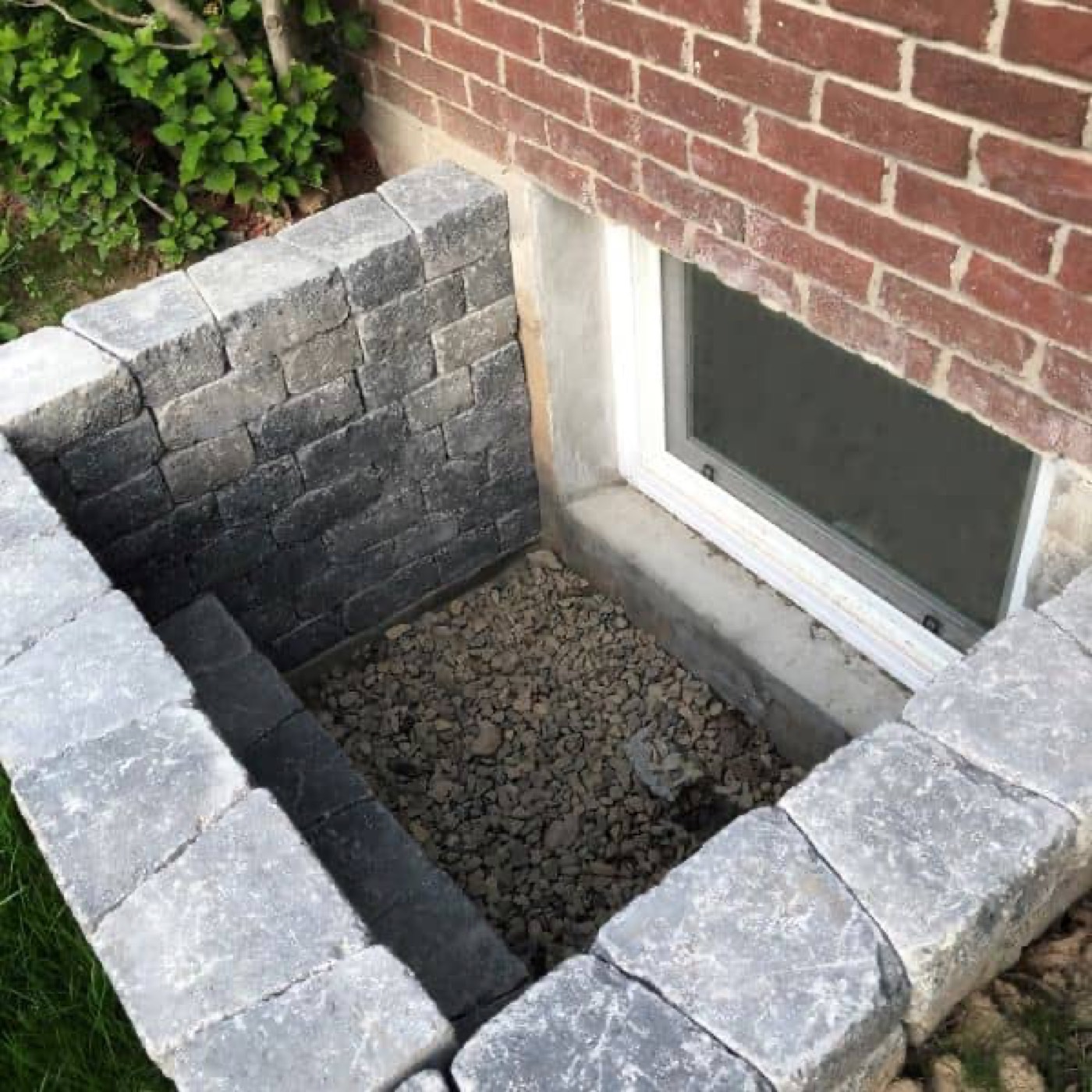
A block and stone wall built up around a window well, still under construction
Photo: The Great Egress Co.

The fixes, cheapest first

Three interventions, and only one of them is a project.

Clear it. Dig the gravel out down to the drain, wash it, clear the shaft, put it back. An afternoon, and it is worth doing before you conclude anything else, because a blocked drain looks exactly like an absent one from above.

Regrade around it. If the soil runs toward the house, move it. The ground should fall away from the foundation over the first few feet. This costs a day and some fill, and it fixes more wet basements than anything done inside the well.

Build a drain. A vertical shaft from the well floor down to the footing drain, backfilled with washed stone. This means excavating beside the foundation, and it is the point where most people stop being their own contractor.

What it costs

Nobody we track publishes a price for a drain on its own.

This is the question the search results answer with a confident average, and we are not going to. We read the pages installers publish themselves, and across every price on this site not one is a standalone window well drain. What we can show you is the 2 companies that name drainage inside the price of a complete job.

$3,500–$10,000
Egress Solutions · PA
$4,500
All Basement Windows · OH

Read that for what it is: drainage bundled into a full egress installation, not the price of retrofitting a drain into a well you already have. If you are calling contractors, ask them to price the drain as its own line, and ask whether the quote includes tying into the footing drain or only digging a hole and filling it with stone. Those are two different jobs at two different prices.

When it is not the well

Water at the window is not always water from the window.

A wall that is wet below the window, or damp along the floor several feet either side of it, is usually not a well problem at all. Hydrostatic pressure pushes water through a foundation wherever it can, and the window is simply the place you notice it first because it is the one part of the wall you look at.

The test is straightforward: fill the well with a hose and watch. If the water sits and the inside stays dry, your drain is the problem. If the inside darkens while the well drains normally, the water is coming through the wall and no amount of work in the well will change it. That is a waterproofing job, and a different trade.

Before the next storm

A cover buys you time. It does not replace the drain.

Keeping rain and leaves out of the well slows down both problems at once: less water arriving, and less debris to pack the gravel. It is the cheapest useful thing you can do while you work out whether the drain needs clearing or building. It is not a fix, and a well with a cover and no drain still fills from the ground.

Covers and grates, priced

How a well is dug and drained from scratch · The wells themselves